


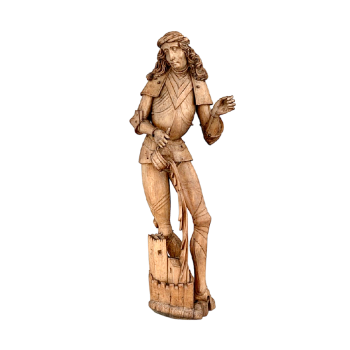
Wooden statue of St. Florian
This is a wooden statue of Saint Florian. St. Florian is a Catholic saint. He is honored as the chief saint of firefighters, chimney cleaners and winemakers. He is also regarded as the chief guarantor against fires and floods. The statue depicts St. Florian as an image of a Roman soldier. He usually holds a bucket or basin, symbolizing his role in dousing flames and protecting people from fire hazards. Legend has it that in the 4th century AD, St. Florian used a bucket of water to put out a fire and save a city, which made him the patron saint of firefighters.

Ancient Rome bronze Minerva (Minerva) goddess head
This is the ancient Roman bronze Minerva goddess head, Minerva corresponds to the Greek mythological wisdom and war goddess Athena, she is the goddess of wisdom, craftsmanship and war. The statue is cast in bronze and presents a copper-green oxidation trail. She wears an Attica-style helmet adorned with a feathery headdress, one of the goddess's signature features that underlines her status as a warrior goddess.
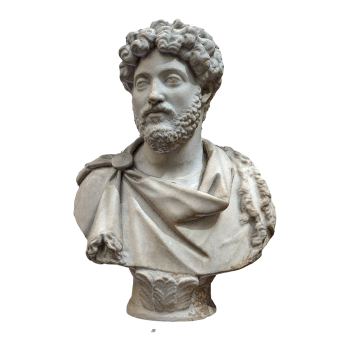
Marble bust of Roman Emperor Marcus Aurelius
This marble statue is the bust of Roman Emperor Marcus Aurelius, wearing a tassel cloak. The height of this statue is 73.66 centimeters and it comes from Jason Magnus' house. The production date of this statue is approximately between 160 and 170 AD. This statue is now on display at the British Museum.

Marble statue from the Roman Empire period, 'The Injured Amazon'
In Greek art, the Amazon is a mythical race of female warriors from Asia Minor, often depicted fighting against heroes such as Hercules, Achilles, and Theseus. This statue represents a refugee who escaped from battle, losing her weapon and bleeding from the wound beneath her right breast. Her shawl was untied on her shoulders, a waistband was tied around her waist, and a temporary reins were tied around her horse's back. Despite her predicament, there were no signs of pain or fatigue on her face. She gently leaned against a pillar on the left, with her right arm elegantly resting on her head, a gesture usually used to indicate sleep or death.

The sculpture of "Terpsichore" (Goddess of Song and Dance)
Terpsichore "is an ancient Roman statue. In Greek mythology, Terpsichore is one of the nine Muses and the goddess of dance and choir. Her name comes from ancient Greek, meaning 'joy of dance'. She is usually depicted sitting, holding strings, and accompanying dancers and choirs with her music. This statue is currently housed in the Vatican Museums in Italy.

Athena's Shield in the Parthenon during the Roman Empire
This is a small marble statue from the Roman period, which is the Athena shield in the Parthenon temple. This artwork is currently housed in the British Museum in London. The statue was made between 100-150 AD. This shield showcases Athena's shield, which was originally part of the Parthenon temple.

Marble bust of Emperor Grommacus Aurelius
The height of this bust is 73.66 centimeters. Marcus Aurelius (April 26, 121 AD - March 17, 180 AD) was an emperor of the ancient Roman Empire who reigned from 161 AD to 180 AD. He was a philosopher of the Stoic school, known for his philosophical ideas and the book "Reflections". He was also a member of the Nerva Antony dynasty, hailed as the last of the five good emperors and the last emperor of the Roman Empire's peaceful era (27 BC to 180 AD). This statue is currently housed in the British Museum.

Roman Emperor Caracalla marble bust
Caracalla was an emperor of the Roman Empire who reigned from 198 to 217 AD. He is known for his strict and cruel way of ruling. This bust has a height of 67.50 centimeters and was discovered at Quattro Fontane on Quirinal Hill in Rome. It is now on display in Gallery 70 of the British Museum.

Ancient Roman Antinos Head Marble Statue
The head of this marble statue was taken from a statue of Antinos, who was wearing an ivy wreath. The bust was added later, with the head fixed on top. The head of this statue dates back to the Roman period and was made around 130-140 AD. It was excavated on the Janiculum Mountain in Rome, Lazio, Italy, in Europe. The height of the head of this statue is 81 centimeters and it is currently housed in the British Museum. Antinos was the boyfriend or lover of Roman Emperor Hadrian.

Marble statues of the gods Mars and Venus
This statue is made of marble, standing 1.73 meters (5 feet 8 inches) tall, and was crafted between 120-140 AD (with repairs made around 170-175 AD). The male figure originally represented the ancient Roman Emperor Hadrian, but his head was later restored to Lucius Verus. The female image represents his wife Sabina. This statue is currently located in the Louvre Museum in Paris, France.

The marble statue of the Byzantine Empire in ancient Rome, known as the "Marble Maiden Statue"
This artifact is a small Eastern Roman marble statue depicting a young girl. Its production date is around 525 BC to 500 BC, and the statue is made of marble. The posture and attire of this young girl statue are the same as the famous Kore statue found in the Acropolis of Athens. Her left leg moved slightly forward, and her left hand grabbed her thin linen jacket, pulling it tightly over her leg; The right hand may have once held an offering. Her short cloak slanted over her right shoulder and then hung down from her left arm, forming vertical, stacked folds. The surface of the statue becomes vivid due to the variations in clothing layers and textures.
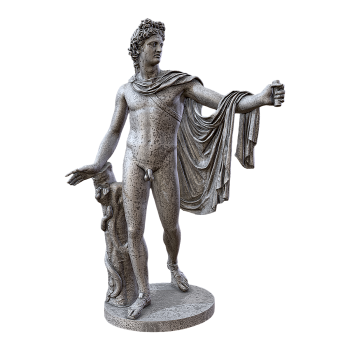
The bronze statue of Apollo, the Sagittarius, from the ancient Roman period
This statue is part of the collection of Cardinal Giuliano della Rovere in the Roman palace. When he was elected as Pope Julius II (1503-1513), these statues were transferred to the Vatican and have been preserved there since at least 1508, now housed in the Vatican Museums. Apollo walked forward with great majesty, as if he had just released an arrow from the bow in his left hand. The date for this work has been determined to be mid February AD century and is believed to be a replica of the original bronze statue dating back to 330-320 BC.

Pericles marble bust
The statue is a Roman period marble statue from Tivoli, Italy, in the 2nd century AD, modeled on a bronze statue of the Greek sculptor Kresilas. Pericles of this statue, which wears a helmet that pushes to the top of his head, is also a parody of an early Greek original. The height of the statue is 58.42cm and is now on display in the British Museum.

The marble statue of Dioscuri in Copenhagen Square, Denmark
Dioscuri was a twin deity in ancient Greek and Roman mythology. They rescued the shipwrecked crew and were given a good wind by people offering sacrifices. Their mother was Leda and their father was Zeus, the king of the gods. Later Zeus placed them in the sky and became Gemini. In Rome, tradition holds that reverence for them was introduced in 484 BC. Orus Pastumius built their shrine on the square right after he swore at the Battle of Lake Rejilus. Legend has it that in this battle, Dioscuri fought on the side of the Romans and brought news of the victory to Rome.

Popular Models

Honey Badger (3D animated model)
192 View
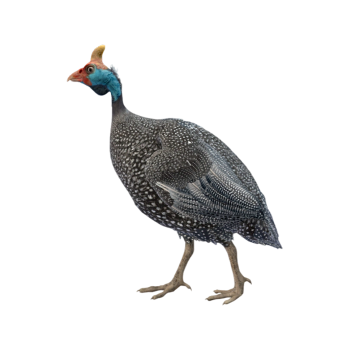
Guinea fowl (3D animated model)
163 View
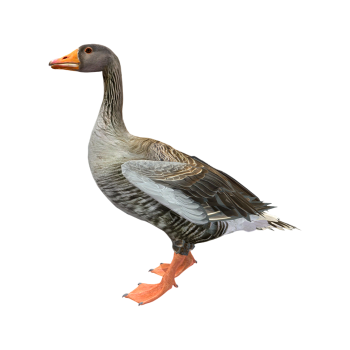
Wild Goose (3D animated model)
185 View

Red Fox (3D animated model)
153 View
Random Model
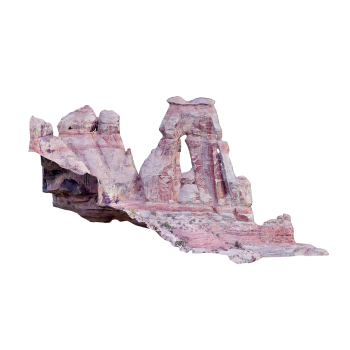
Utah Druid Arch
847 View

Bentley Continental GT supercar
757 View


Three row oared warship
1047 View


Fossil skull of woolly rhinoceros
989 View


Tiger (cub) 3D animation model
832 View
